CENOS : Simulation Software : Induction Heating : Radio Frequency : Wireless Charging
  • Products
    • Radio Frequency
    • Induction Heating
    • Wireless Charging
    • Electromagnetic Stirring and Pumping of Liquid Metals
    • Busbar Heating
  • Resources
    • News and articles
    • Case studies
    • User stories
    • Academic stories
    • Testimonials
  • Documentation
  • Academic
  • About
  • Contact
  • Book a demo
  • Menu Menu
CENOS Case Study - How INLAN tested 10 boards and found CENOS simulation matched hardware results

How INLAN tested 10 boards and found CENOS simulation matched hardware results

March 26, 2026/in Radio Frequency

A 10-board test showed that CENOS matched the measured resonance very closely across nine valid boards, giving INLAN a stronger basis for early design decisions before the next hardware step.

In RF design, simulation is not there to make nice images. It is there to help engineers decide what to do next. That is what makes this particular test useful.

INLAN tested 10 fabricated f0 boards and compared the measured results with simulation outputs from CENOS, COMSOL, and ADS. One board was defective, so the final comparison used nine valid boards.

This is important because one board can be an exception. Nine valid boards show whether the result holds across real hardware.

Across those nine boards, the measured resonance at minimum S11 clustered around 894.78 MHz. The CENOS simulation curve reached its minimum at 893.47 MHz, only 1.31 MHz away from the measured mean. For a team making design decisions before the next hardware step, that is not just a nice match. It is the kind of result that helps reduce uncertainty early.

In other words, the point of this particular test is not that simulation produced a curve that looked convincing. The point is that it tracked fabricated hardware so closely to support the design process in a meaningful way.


“What stood out to us was how closely the CENOS simulation aligned with the measured board performance. That level of consistency is important because it helps us evaluate designs earlier and move into physical testing with more confidence.”

— INLAN team

Why this test is important

In RF design, resonance location is one of the first things engineers need to get right. If the resonance lands far away from the target region, the design direction may need to change before it makes sense to fine-tune anything else.

The measured boards did not collapse into one identical response. Their minimum frequencies spanned 891.65 MHz to 898.25 MHz, with a sample spread of ±2.26 MHz around the mean. That is exactly the sort of variation engineers expect when boards move from design files to manufactured hardware.

In this particular test, CENOS did land almost exactly the same result.

What was tested

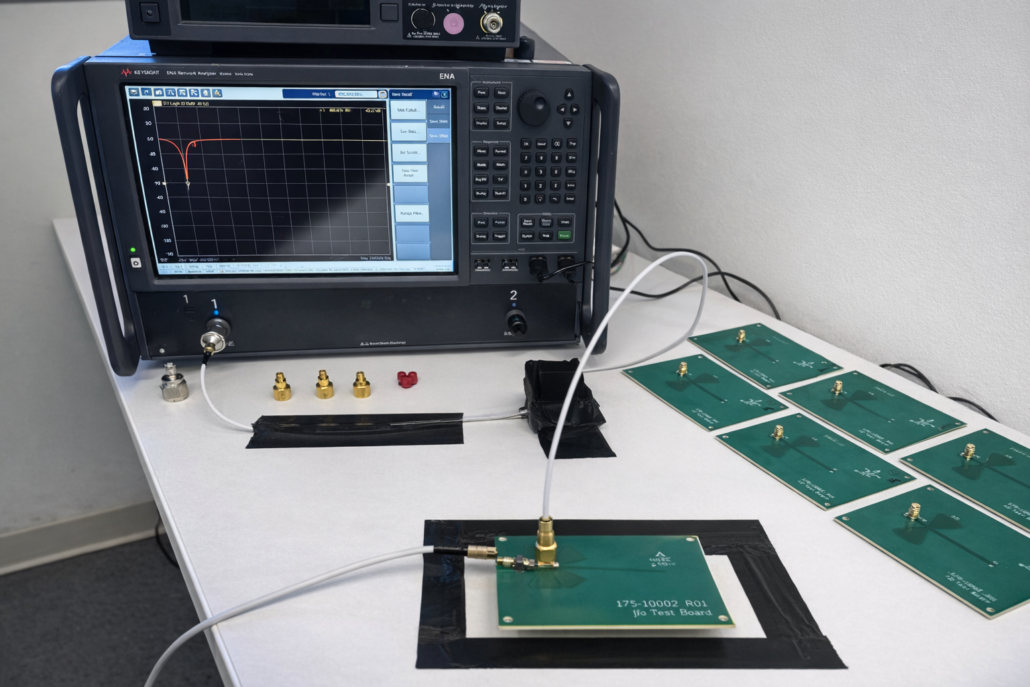
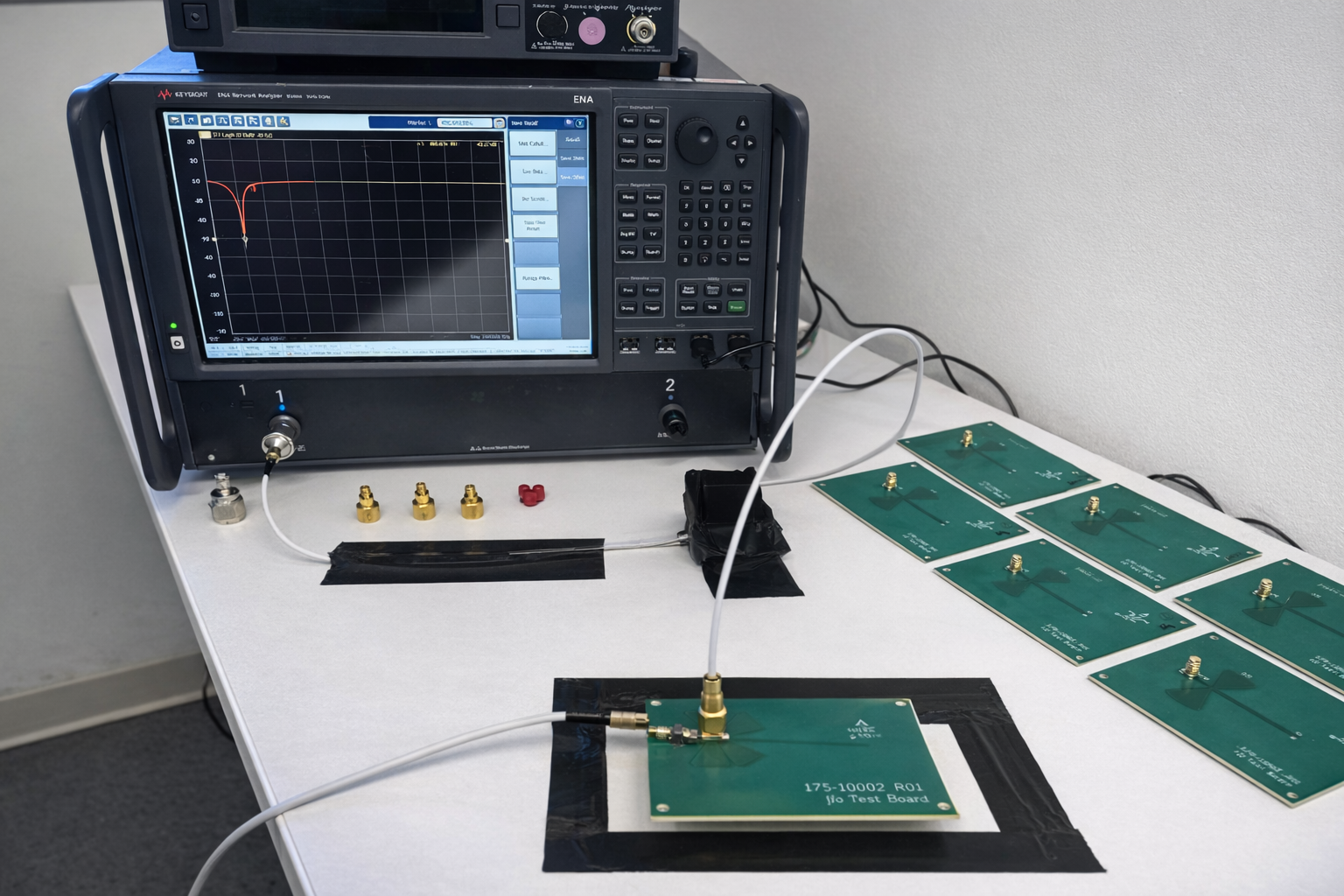
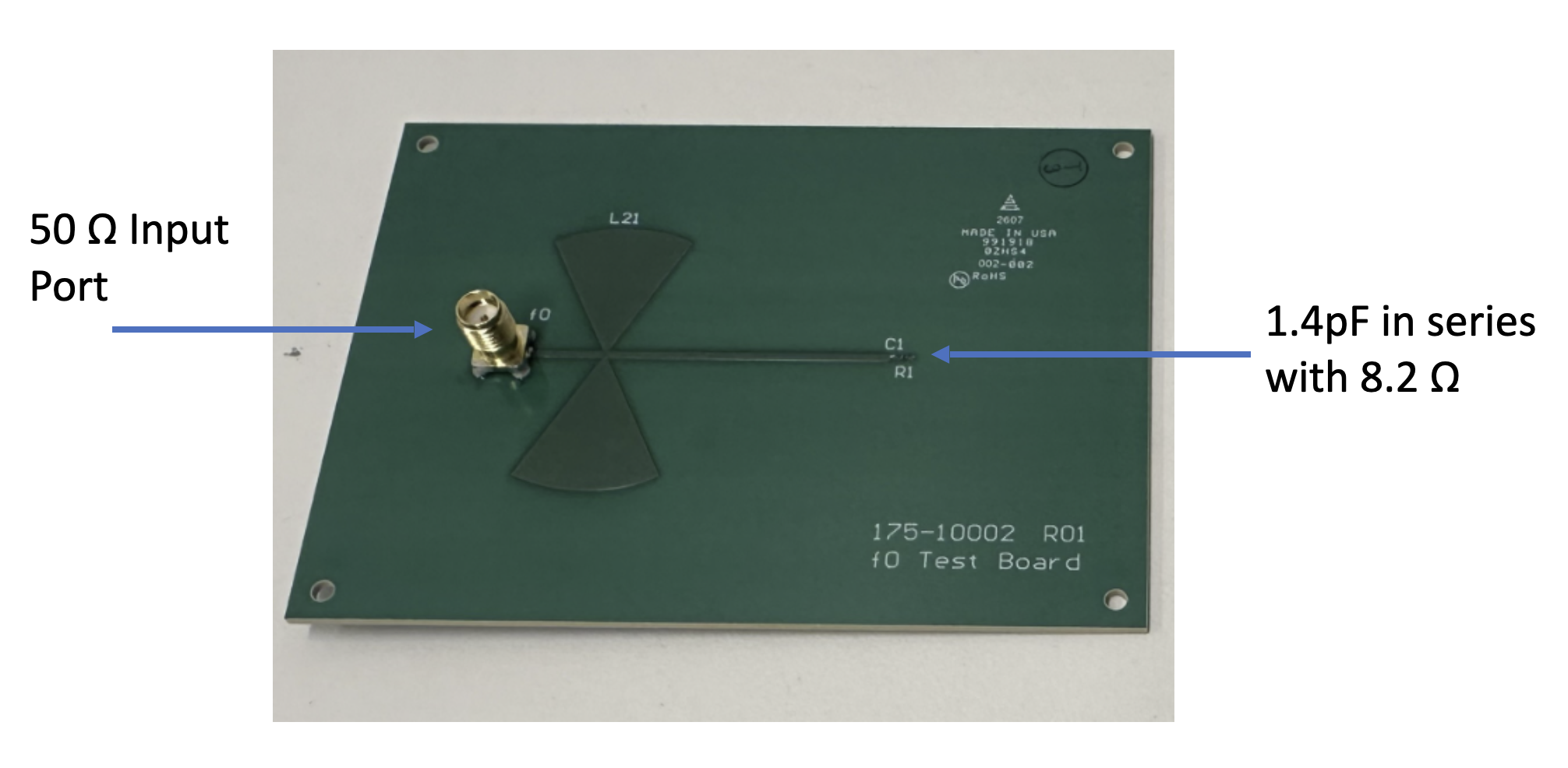
INLAN measured the f0 board with a 50-ohm input port and a 1.4 pF capacitor in series with 8.2 ohms. The test setup used Megatron 7(N) board material, an E5080B network analyzer, and an 8552D calibration kit. Calibration was performed at the end of the cable, and the board was placed on spacers during measurement.
 

CENOS Case Study - How INLAN tested 10 boards and found CENOS simulation matched hardware results

Figure 1 shows the board and the measurement setup used in the test.

These details are important because simulation and measurement only make sense when the setup is clearly defined.

What the simulation comparison showed

When the simulated S11 views are placed side by side, the resonance placement already tells part of the story. In this test, the COMSOL view places the notch near 875 MHz, while the CENOS view places it around 890 MHz. Since the measured boards later cluster around 894.78 MHz, the CENOS result is visibly closer to the tested hardware in frequency, almost exactly the same as tested hardware.
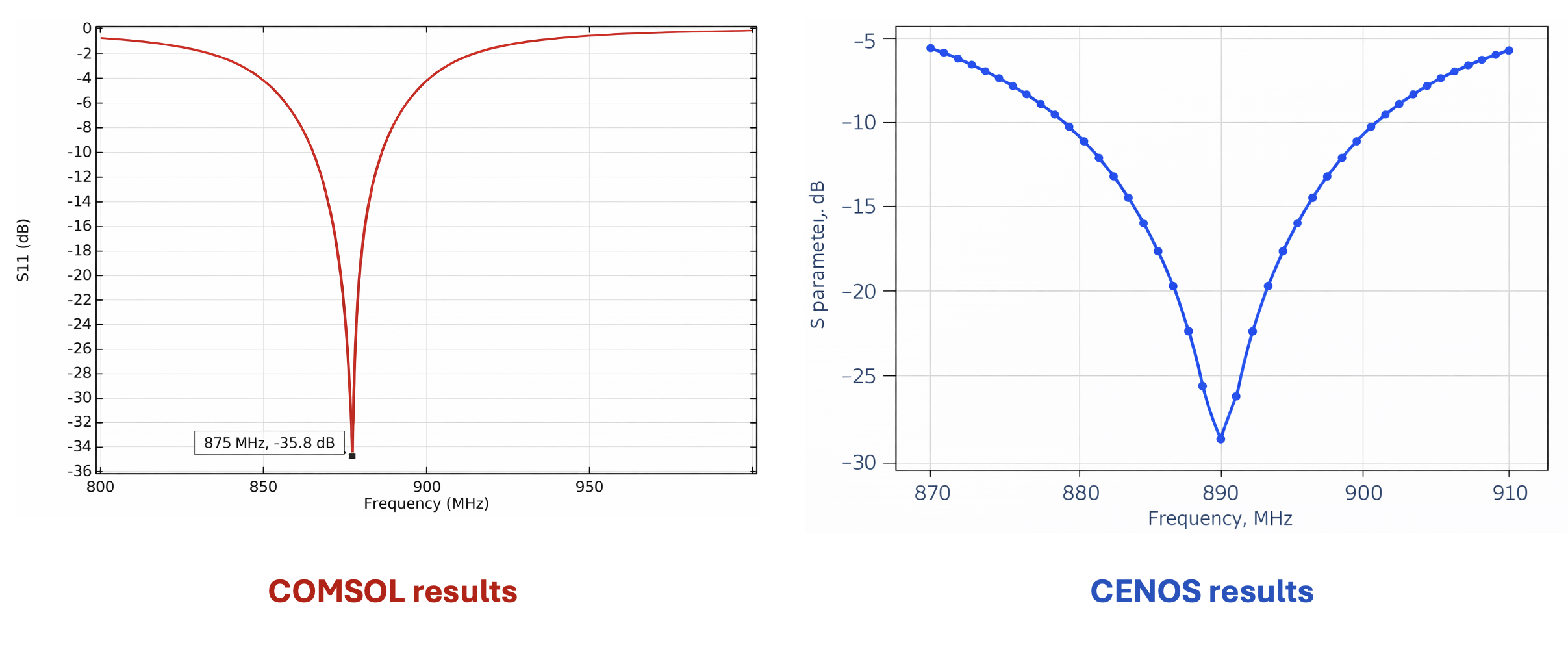
 

Figure 2 shows the simulated S11 comparison.

Figure 2 shows the simulated S11 comparison.


Simulation platforms are built for broad and demanding engineering work, and each has its own strengths depending on the use case, setup, and model assumptions. But in this specific comparison, the resonance location predicted by CENOS was almost identical to the measured board behavior.

And for early design decisions, that is a big deal.

Before teams worry about perfect notch depth, they usually need to know whether the design is landing in the right region at all. If the resonance is off by tens of megahertz, the next step may be a redesign. If it lands close to the measured hardware, the team can move forward with much more confidence.

What the full data showed

The full overlay of the nine measured traces, their mean response, and the CENOS simulation curve makes the benchmark easier to read.

First, it shows that the measured boards have a visible spread. That is expected in manufactured hardware, and it is part of why a multi-board comparison is more convincing than a single-board match.
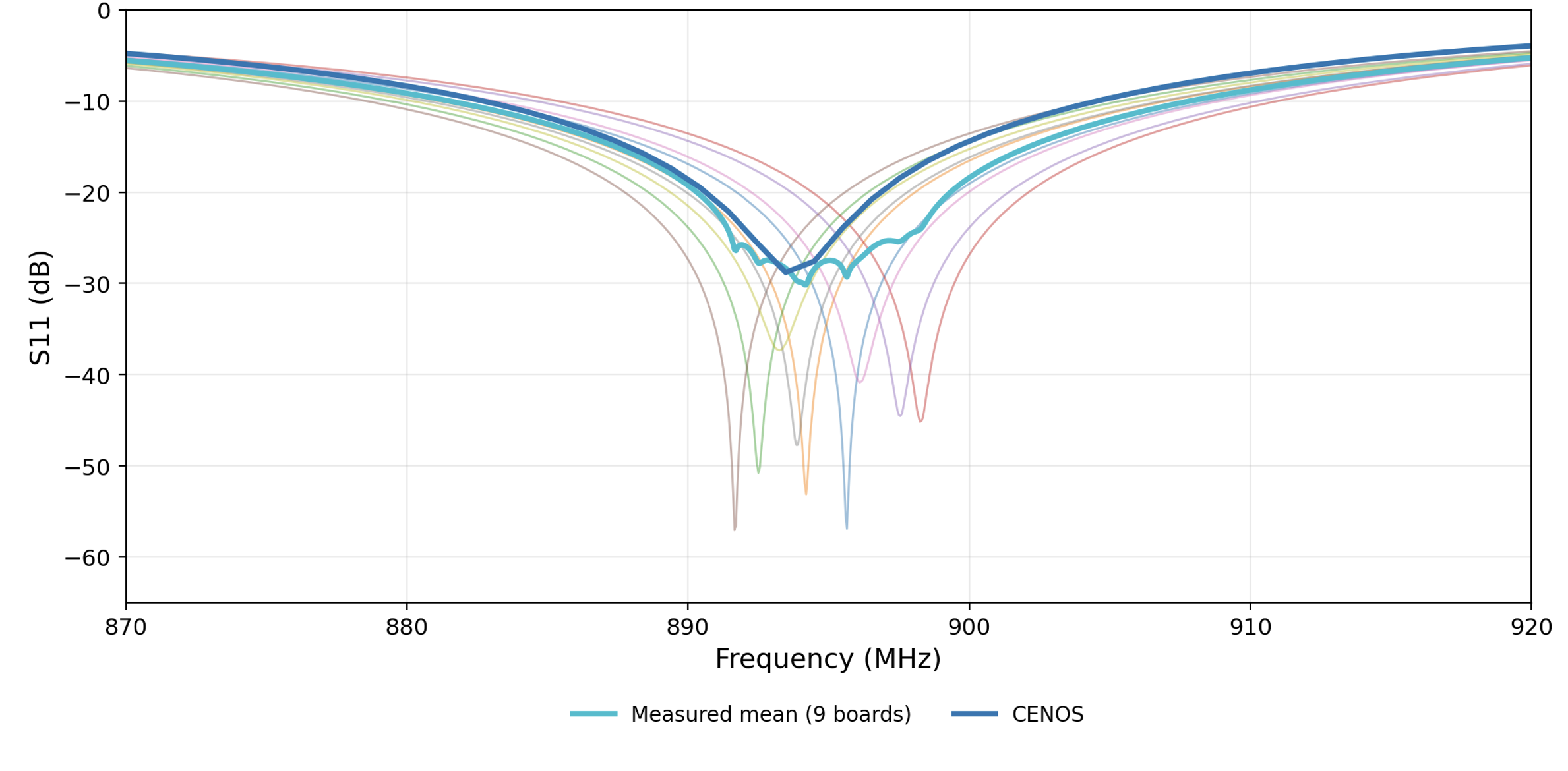
 

Figure 3 shows the measured traces, the measured mean, and the CENOS simulation together.

Figure 3 shows the measured traces, the measured mean, and the CENOS simulation together.

Second, it shows that the CENOS curve passes through the same resonance region as the measured cluster. It lands where engineers would want it to land if they are using simulation to make the next design decision.

Board-by-board resonance positions
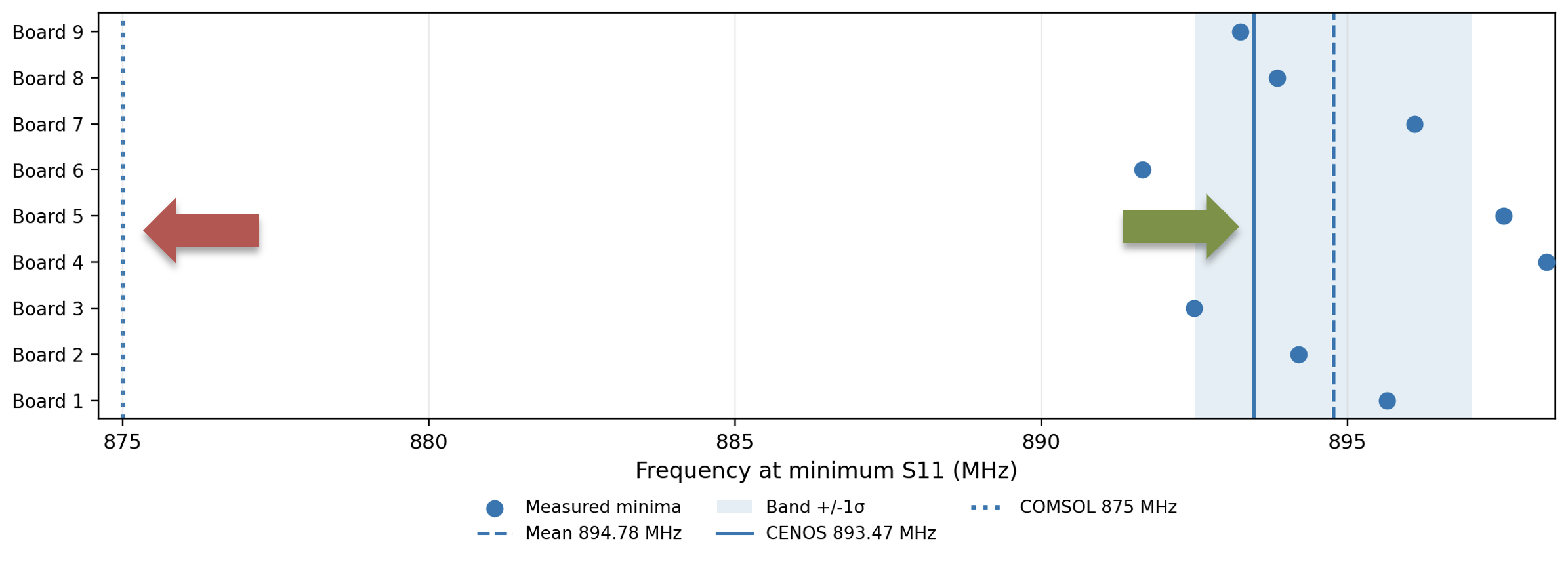
 

Figure 4. Frequency at minimum S11 for each measured board, compared with the measured mean, 1-sigma band, CENOS, and COMSOL.

Figure 4. Frequency at minimum S11 for each measured board, compared with the measured mean, 1-sigma band, CENOS, and COMSOL.


This view strips away curve shape and keeps only the resonance position. The measured boards span 891.65 MHz to 898.25 MHz, and the CENOS minimum falls inside that observed range.

Measured mean resonance
894.78 MHz
CENOS raw-curve minimum
893.47 MHz
COMSOL reference
875 MHz

That is how simulation is usually used in practice. Not as a replacement for all testing, but as a way to reduce blind iteration and move into testing with a better starting point.

Why companies use simulation tools like CENOS

The most useful takeaway is that this is exactly what simulation should do in engineering work.

A good simulation tool helps engineers make decisions earlier. It helps them see whether resonance is landing where it should, whether a design direction is right, and whether the next hardware step is likely to confirm the approach rather than restart it.

That does not remove the need for physical boards, lab measurements, or validation. Physical testing is still where manufacturing variation, fixtures, tolerances, and final performance are checked. But simulation changes the quality of that process. Instead of building first and hoping the design is in the right range, engineers can build with a much clearer expectation of what they will see.

And that is exactly what simulation is supposed to do.

Print Friendly, PDF & Email
Share this entry
  • Share on Facebook
  • Share on X
  • Share on WhatsApp
  • Share on LinkedIn
  • Share on Tumblr
  • Share on Vk
  • Share on Reddit
  • Share by Mail
https://cenos-platform.com/wp-content/uploads/2026/03/cenos-case-study-how-inlan-tested-10-boards-and-found-cenos-simulation-matched-hardware-results.png 1024 1536 Martin /wp-content/themes/cenos/images/layout/logo.png Martin2026-03-26 11:54:022026-04-01 08:13:43How INLAN tested 10 boards and found CENOS simulation matched hardware results

Browse by Categories

  • Academic
  • Antenna Design
  • Busbar Heating
  • Case studies
  • Electromagnetic Stirring and Pumping
  • General news
  • Induction Heating
  • Radio Frequency
  • User testimonials
  • Wireless Charging

Latest in Blog

  • CENOS Case Study - How INLAN tested 10 boards and found CENOS simulation matched hardware results
    How INLAN tested 10 boards and found CENOS simulation matched hardware resultsMarch 26, 2026 - 11:54 am
  • Catheter tipping case study: making better medical devicesApril 10, 2025 - 11:39 am
  • How simulation improves surface hardening for vice components
    How to use FreeCAD and CENOS simulation to improve surface hardening for vice componentsApril 1, 2025 - 1:09 pm
  • Optimizing solidification simulation in electromagnetic stirring applications: case study
    Optimizing solidification simulation in electromagnetic stirring applications: case studyJanuary 29, 2025 - 4:20 pm
  • Using simulation software to improve micro mobility mechanics
    Using simulation software to improve micro mobility mechanicsDecember 10, 2024 - 4:34 pm

We are a software company on a mission to reshape the engineering process by providing engineers of all disciplines with truly accessible simulation tools for practical work.

caotica.ee veebidisain, kodulehe disain, veebi arendus, kodulehe arendus, kodulehe tegemine, wordpress arendus caotica.ee veebidisain, kodulehe disain, veebi arendus, kodulehe arendus, kodulehe tegemine, wordpress arendus

Products

Radio Frequency
Induction Heating
Wireless Charging
Electromagnetic Stirring, Melting and Pumping of Liquid Metals
Busbar Heating

Resources

Documentation
News and articles
Case studies
Testimonials
About
Careers

Get in touch

info@cenos-platform.com

Americas

C. Héroe de Nacozari 25B-int V-2210, Centro, 76000 Santiago de Querétaro, Qro., Mexico.
(US) +1 614 705 0681

Europe

Lastadijas street 8-k-1, Riga, Latvia.
(EU) +371 27819253

Print Friendly, PDF & Email
© 2017–2025 CENOS™ SIA. All Rights Reserved. caotica.eu web design, web development, digital marketing, wordpress development caotica.eu web design, web development, wordpress development, digital marketing, online marketing
  • Privacy & Data Policy
  • Terms & Conditions
Scroll to top

This site uses cookies. By continuing to browse the site, you are agreeing to our use of cookies.

AcceptSettings

Cookie and Privacy Settings


How we use cookies

We may request cookies to be set on your device. We use cookies to let us know when you visit our websites, how you interact with us, to enrich your user experience, and to customize your relationship with our website.

Click on the different category headings to find out more. You can also change some of your preferences. Note that blocking some types of cookies may impact your experience on our websites and the services we are able to offer.

Essential Website Cookies

These cookies are strictly necessary to provide you with services available through our website and to use some of its features.

Because these cookies are strictly necessary to deliver the website, refusing them will have impact how our site functions. You always can block or delete cookies by changing your browser settings and force blocking all cookies on this website. But this will always prompt you to accept/refuse cookies when revisiting our site.

We fully respect if you want to refuse cookies but to avoid asking you again and again kindly allow us to store a cookie for that. You are free to opt out any time or opt in for other cookies to get a better experience. If you refuse cookies we will remove all set cookies in our domain.

We provide you with a list of stored cookies on your computer in our domain so you can check what we stored. Due to security reasons we are not able to show or modify cookies from other domains. You can check these in your browser security settings.

Other external services

We also use different external services like Google Webfonts, Google Maps, and external Video providers. Since these providers may collect personal data like your IP address we allow you to block them here. Please be aware that this might heavily reduce the functionality and appearance of our site. Changes will take effect once you reload the page.

Google Webfont Settings:

Google Map Settings:

Google reCaptcha Settings:

Vimeo and Youtube video embeds:

Privacy Policy

You can read about our cookies and privacy settings in detail on our Privacy Policy Page.

Privacy & Data Policy
Accept settings